2026 Volvo XC40 Review: Can It Turn Me Into a Volvo Person?
The Volvo XC40 has barely changed since 2019, and a refresh is on the way. So instead of a regular review, I

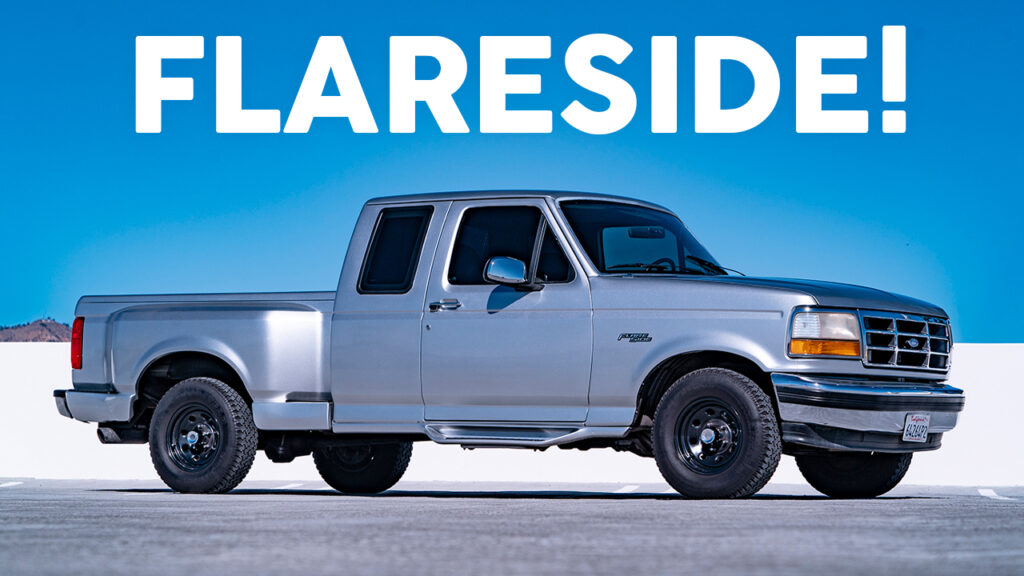
The 1992 Ford F-150 Flareside traded bed space for style, and in doing so it helped invent the lifestyle pickup. Thirty years later, its nostalgia has a nostalgia of its own.
I wasn’t shopping for a truck. I was scrolling Craigslist one day when a silver 1992 Ford F-150 Flareside popped up, and something about the photos looked familiar. Then it hit me: I knew exactly where that was—it was my neighbor’s truck! I walked over, we talked for a while, and I drove it home that same day.
I’m not really a truck person. I’ve owned a bunch of them, mainly so I could haul some crap around, and the Flareside is honestly not very good at hauling crap. That bed is the whole point of this truck, and it’s also the most ridiculous thing about it.
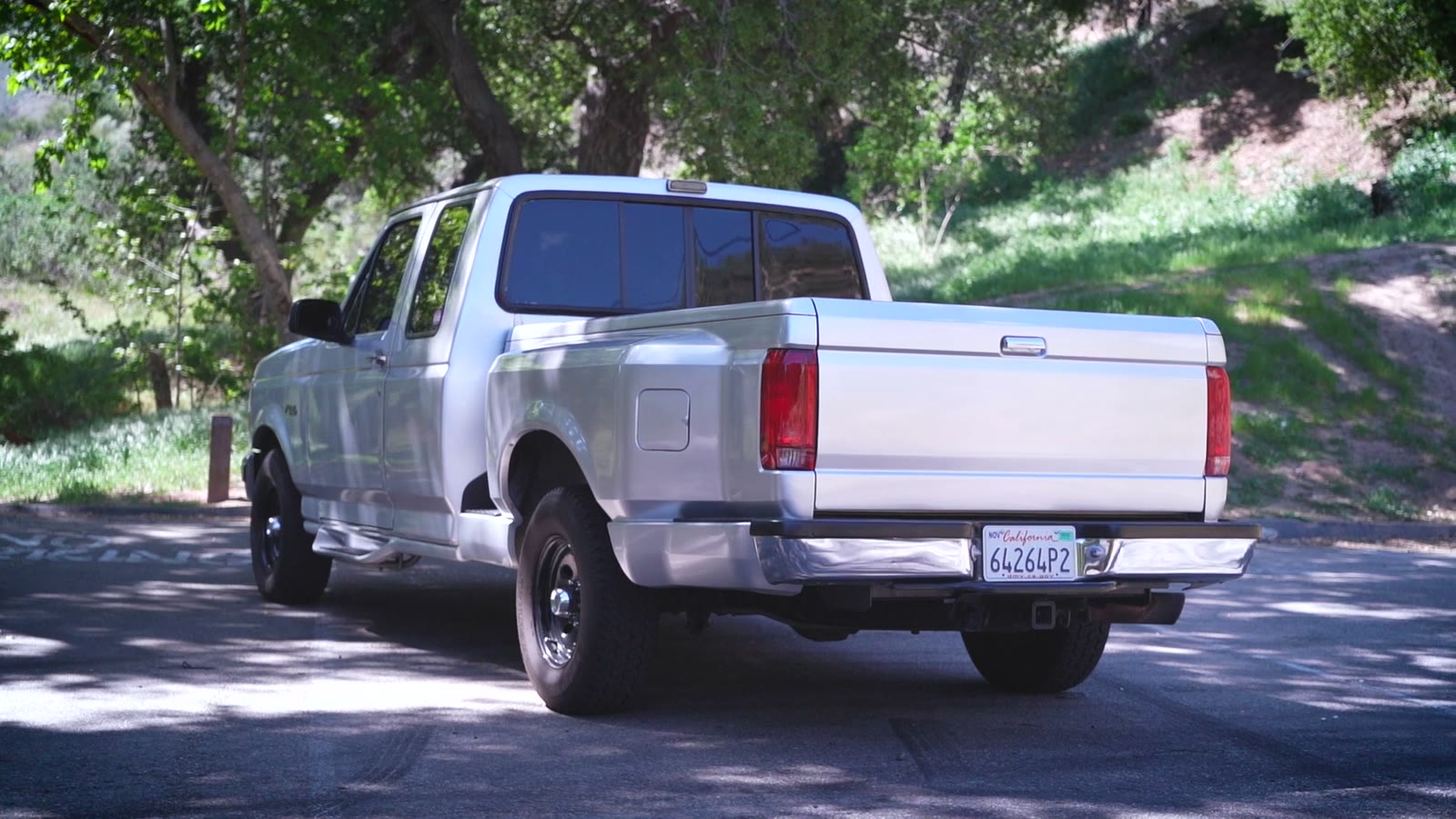
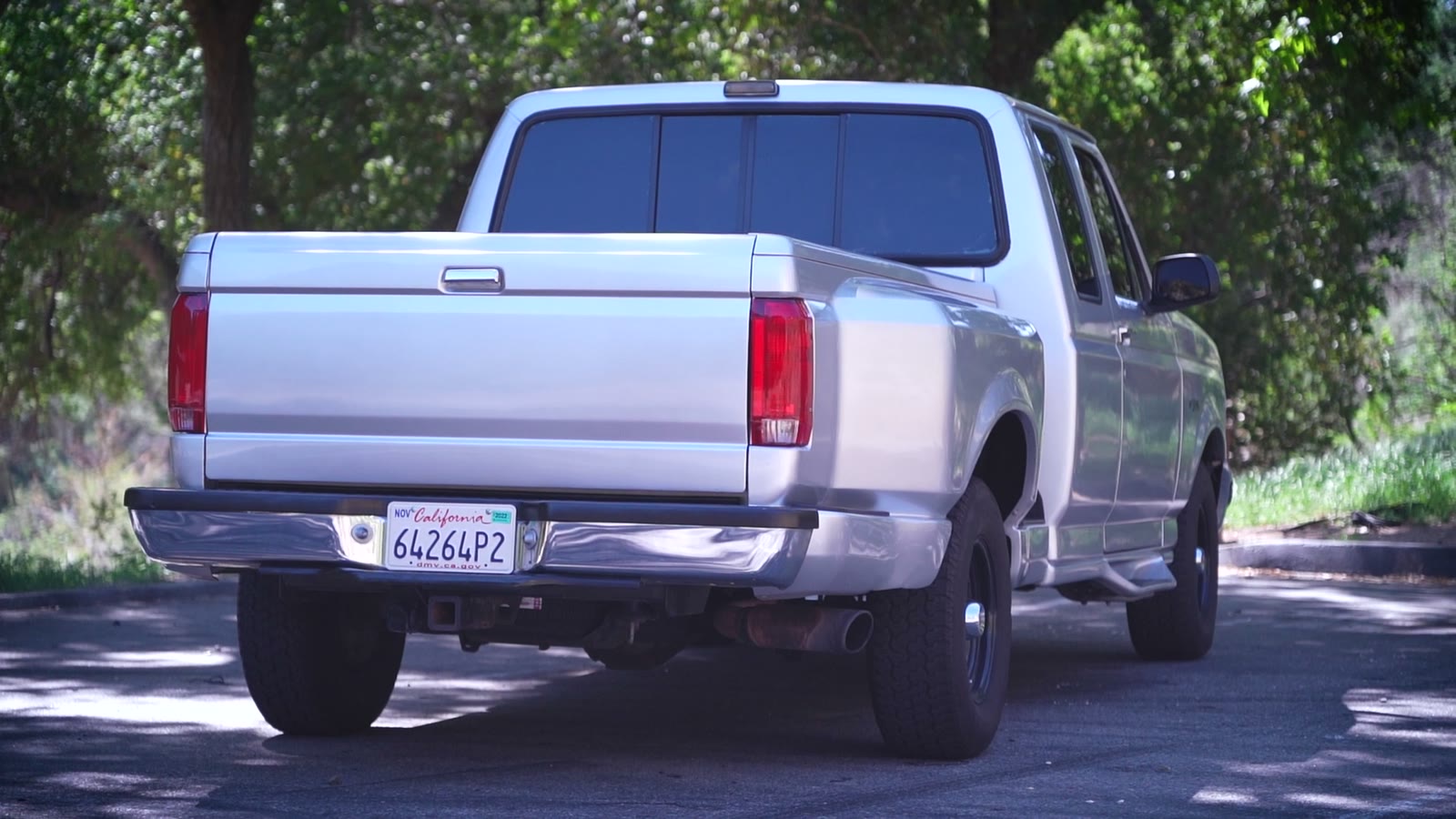
So let’s talk about the elephant in the room: those flared rear fenders. Why would anybody want a truck with a bed that’s less useful?
You have to think back to the early ’90s. This was the start of people using trucks for things that weren’t really truck things. The Flareside was an appearance package, a throwback to the step-side pickups of the ’40s and ’50s, with the rear wheels sitting outside the bed under big, round fenders. Ford’s marketing didn’t show work sites, lumber or gravel; it showed windsurfing and volleyball. It called the Flareside a “personal truck,” and the tagline was “a truck with a personality as unique as yours.”
That’s pretty common thinking today, but it wasn’t back then. If you bought a Flareside, you might tow your jet skis to the lake once every few years, but mostly you just wanted to look cool. It was the perfect embodiment of form over function.
When I was a kid, I thought it was kind of cringe—baby boomer nostalgia for their parents’ trucks. Now that I’m older and have my own nostalgia for the ’80s and ’90s, I really get it. Which makes this truck nostalgia for a vehicle that was designed with nostalgia built in. Meta nostalgia. Nostalgia Inception!
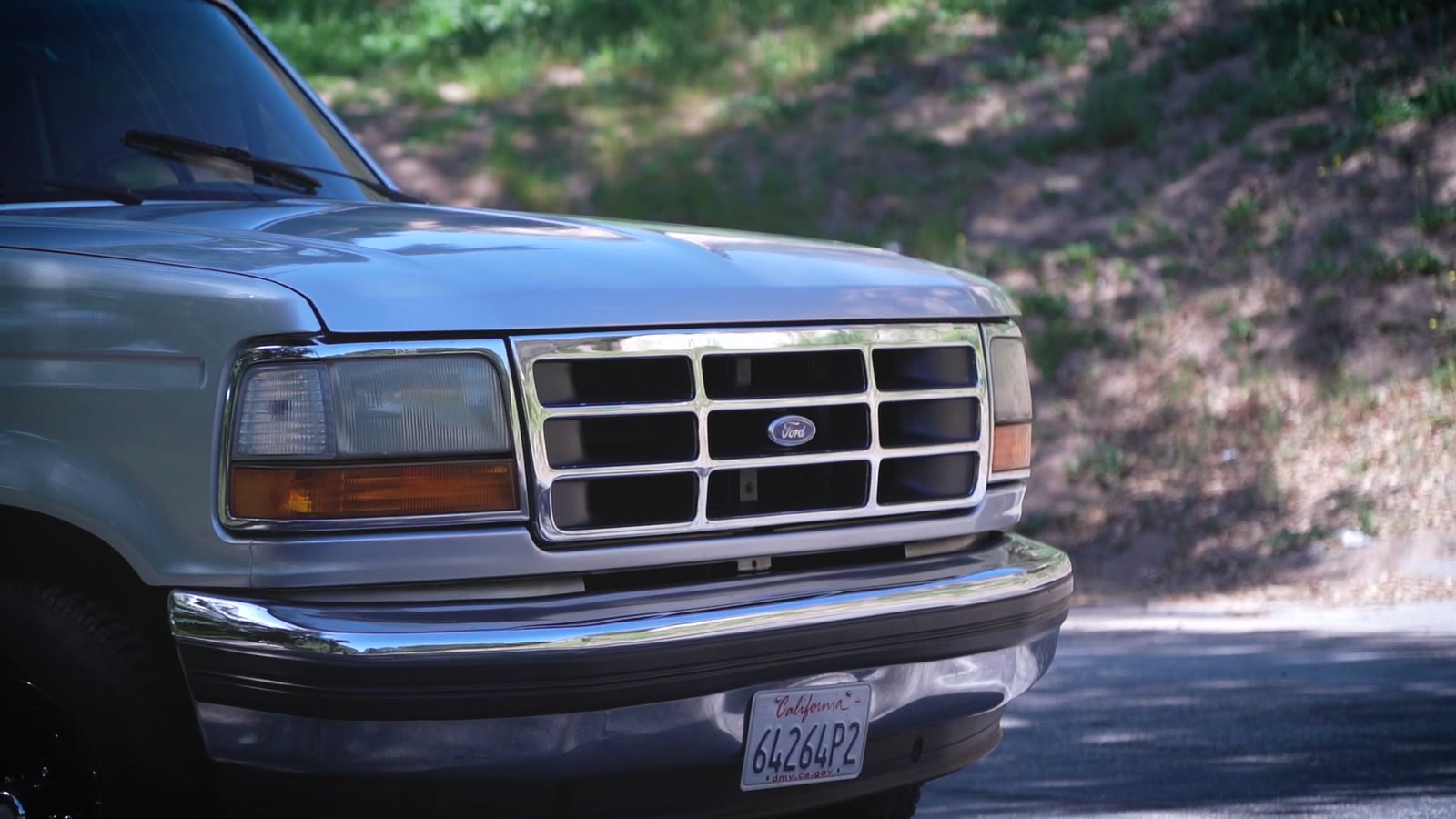
1992 was the first year of the ninth-generation F-150, though the underpinnings were basically carried over from the ’80s: new, but not all that new. The changes were mostly up front, with a more rounded grille and bumper and the F-150’s first aerodynamic headlights.
Flaresides were pretty rare even back in the day. Ford didn’t build many, they cost more than a regular F-150, and the SuperCab versions are rarer still. And like most trucks of the era, F-150s were treated as disposable utility vehicles, driven into the ground and eventually sent to the crusher. Even with the enormous numbers Ford built, finding a clean one gets harder every year.
Mine is a really nice one: a SuperCab, basically an XLT, the top trim, repainted in its original silver, with a spray-in bedliner and aftermarket wheels (an improvement, if you ask me, over the all-chrome ’90s originals). It has about 150,000 miles, and the previous owner recently redid the interior, so it looks pretty amazing for a 30-year-old truck.
My truck has the optional 5.8-liter V8, rated at 210 horsepower and 315 lb-ft of torque when new. The 4.9-liter inline six was standard, and a 5.0-liter V8 sat in the middle. It’s a simple pushrod design that’s easy to work on, and parts are easy to find. It’s old school, but it does have fuel injection, which was kind of a big deal in the early ’90s, when there were still plenty of carbureted cars on the road.
A five-speed manual was standard; mine has the optional four-speed automatic. Even with the top engine, it’s not quick by today’s standards, though it was pretty decent for ’92. If you want to win drag races, go get a Lightning—not this!
Mine is rear-wheel drive, but four-wheel drive was available with push-button shift-on-the-fly, and Ford even let you choose automatic or manual locking hubs and a limited-slip differential. Properly equipped, the brochure says it could tow up to 8,600 pounds, which was pretty impressive for the era. But come on, this is a Flareside. It’s not meant to work. It’s meant to look cool!
As for fuel economy: 12 mpg city and 17 highway, according to the EPA. My real-world number? I don’t want to know. Just fill the tanks and pray. Yes, tanks—there are two of them, for a total of 34.7 gallons, because you’re probably gonna need it.
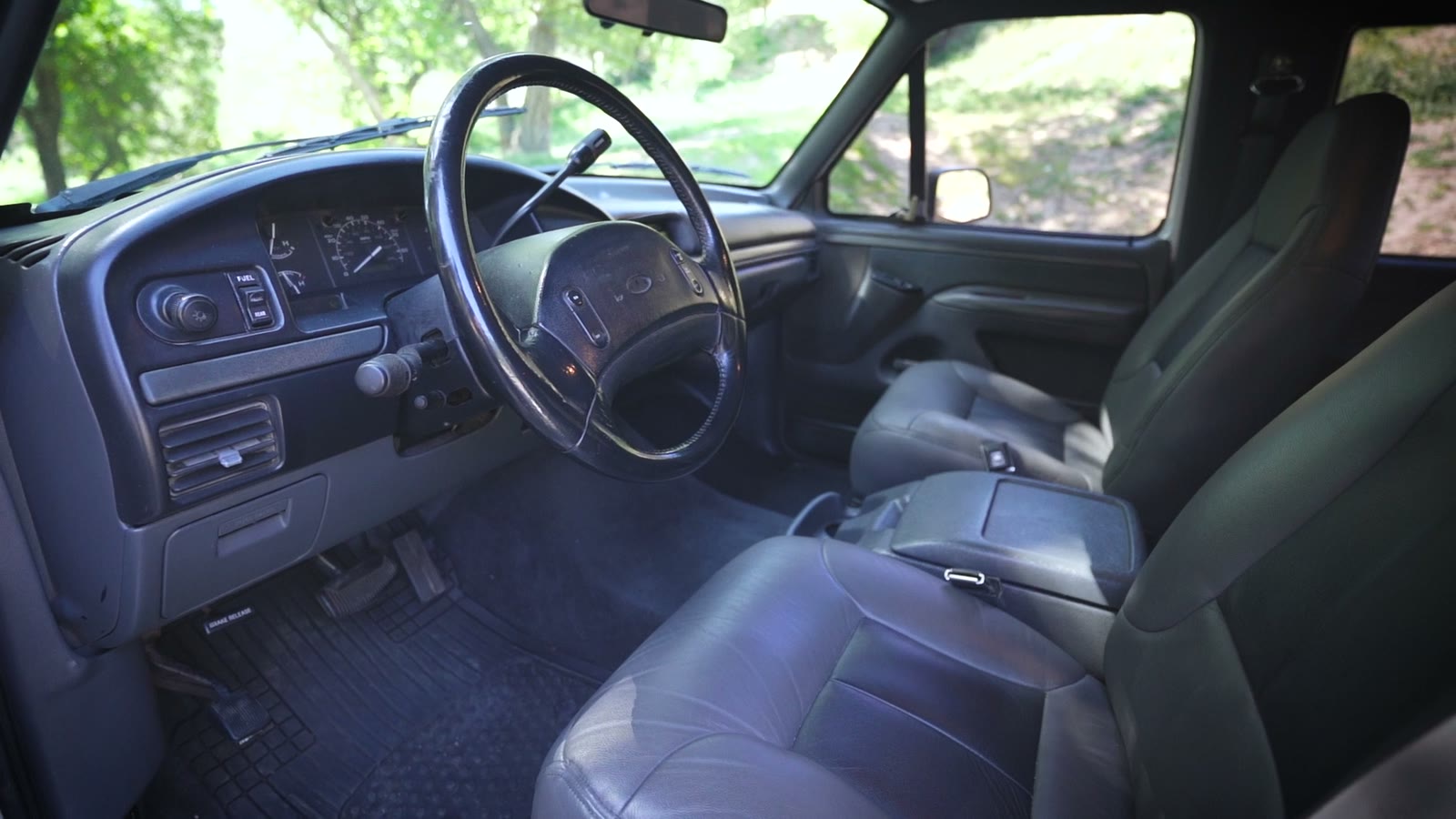
The ninth generation also brought a brand-new interior with more flowing lines, and Ford marketed it as more car-like than the truck it replaced. It’s a simple, clean design. My XLT has leather seats (the previous owner had them reupholstered in leather and refinished the dash pad), power windows and locks, and a power driver’s seat.
It also has smoker windows, those little vent windows in the doors, which is a very ’70s and ’80s feature and kind of funny to see on a ’90s truck! One of my favorite aspects of trucks from this era is the visibility: you can actually see out of them, even out the back. And yes, there’s a back seat. I’d just reserve it for kids, or people you don’t like very much.
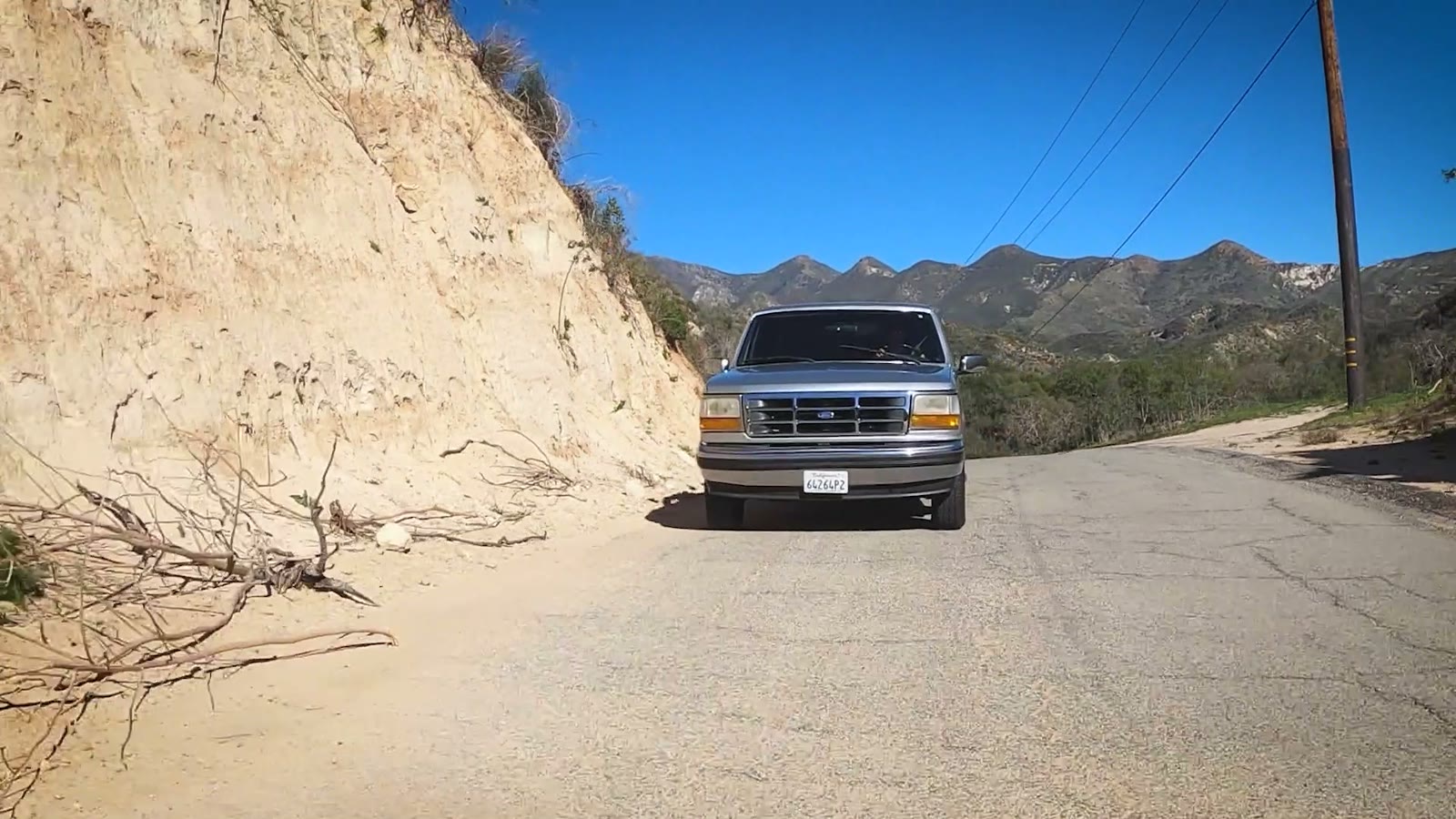
On the road, it rides pretty nicely for a truck of this era, thanks to Ford’s Twin I-Beam front suspension with coil springs, and leaf springs out back. (In the video I called it Twin Traction Beam, but that’s the four-wheel-drive setup—I misspoke, and a sharp-eyed commenter caught it!) It’s not fast and it’s not fancy, but that’s kind of the appeal.
Owning the Flareside has really shifted my perspective on modern trucks. In a world of insanely expensive luxury pickups, spending time in an honest-to-goodness, simple, uncomplicated truck is refreshing. You do have to dial your brain back to 1992, when leather seats in a pickup were a foreign idea to a lot of people. That was the change the Flareside helped kick off.
I took it to Radwood the day I bought it, and my friend Eric from RevMatch TV and I parked it next to a brand-new F-150 Tremor for a comparison video. It was pretty shocking to see how much pickup trucks have grown in 30 years—especially the hood!
New, a ninth-generation F-150 ran roughly $13,000 to $17,000 in 1992, which is about $26,000 to $34,000 in 2022 money, and Flaresides (especially SuperCabs) cost more. Today they’re all over the map: from $500 for a completely garbage example to over $20,000 for a really low-mile Flareside.
Yes, if you want a truck with personality. Ninth-gen F-150s are fantastic, dependable vehicles: new enough to have modern features like fuel injection, old enough to be simple and cheap to maintain, not so precious that you can’t use them as trucks, and not over-styled like so much on the road today.
The Flareside is a slice of history, a throwback to a vehicle that was a throwback in its own day, and the start of a trend (for better or worse) of pickup trucks as an urban lifestyle statement. You’ll buy it thinking that maybe, just maybe, you’ll tow those jet skis to the lake one day. You probably never will. It doesn’t matter—you’ll still look totally rad driving around in this flared beast!
Update: I only kept mine for a little while before it went to a new owner on Bring a Trailer, and for once, one of my car sales actually went well! It left me with some great memories, and an appreciation for the trucks I used to roll my eyes at.
My 1992 Ford F-150 Flareside
Watch the full video above, and check out my 1992 vs. 2022 Ford F-150 comparison too.
The Volvo XC40 has barely changed since 2019, and a refresh is on the way. So instead of a regular review, I

Everybody wants the 4th gen Suzuki Jimny, and Americans can’t have it! But early 3rd gens are legal right now, so I

Honda brought back one of its most storied names as a hybrid coupe, and the internet lost its mind. A week in